
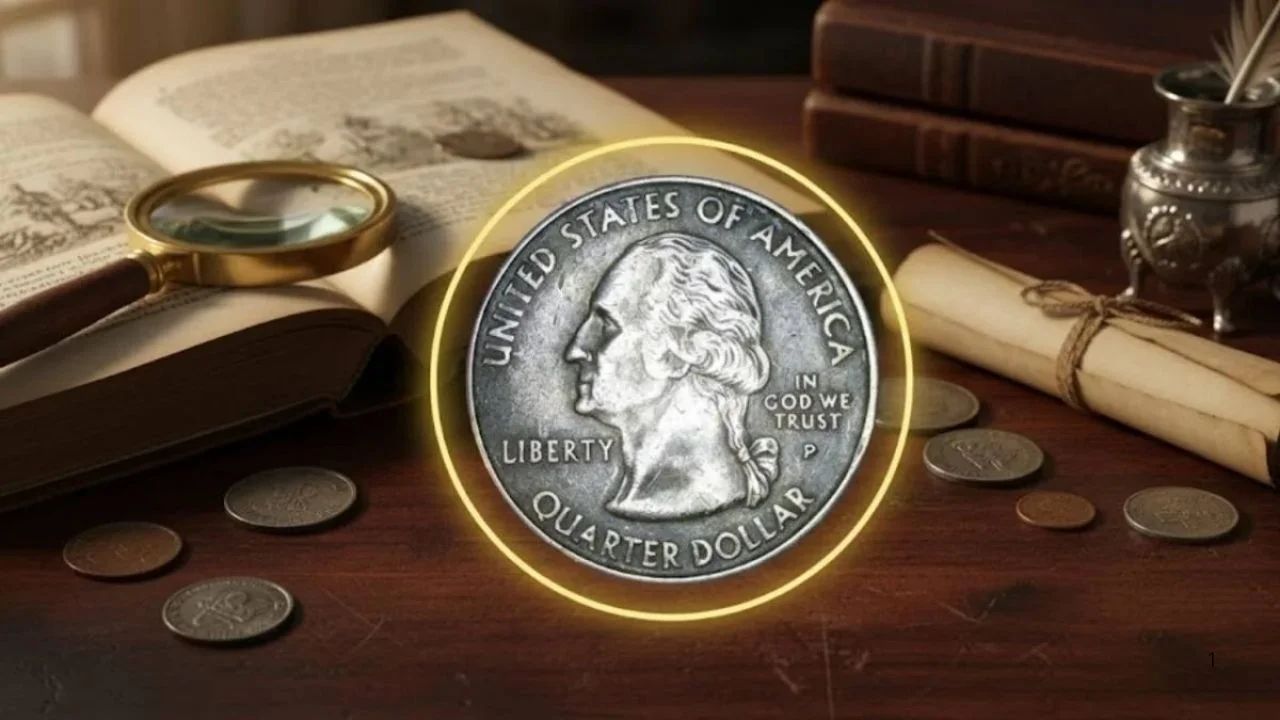
The U.S. State Quarters Program reshaped modern American coin collecting. Launched in 1999 and completed in 2008, it turned everyday pocket change into a nationwide treasure hunt. For millions, it was the first time coins felt personal, educational, and collectible all at once.
Now, more than two decades later, state quarters remain one of the most discussed modern U.S. coin series. In 2026, most are still worth just 25 cents—but a small number stand far above face value. These exceptions reward collectors who understand condition, errors, and long-term market behavior rather than hype.
Understanding the State Quarters Program
The program released five new state designs each year in the order states joined the Union, concluding with Hawaii in 2008. More than 34 billion quarters were minted across Philadelphia, Denver, and San Francisco, making the series overwhelmingly common by volume.
Because of these enormous mintages, age alone has little impact on value. Instead, premiums are driven by three factors: exceptional condition, documented mint errors, and collector demand—especially from registry set builders and error specialists.
Most circulated state quarters remain worth face value, but coins preserved in pristine condition, struck as proofs, or affected by notable minting mistakes tell a very different story.
State Quarters That Command Premium Prices
While hundreds of millions of examples exist for each design, certain state quarters have become modern standouts due to identifiable varieties and scarcity in top grades.
1999-P Delaware “Spitting Horse” Error
One of the most famous state quarter errors, this variety shows a raised die crack extending from the horse’s mouth, creating the illusion of spittle.
Circulated examples commonly sell for $10–$30. Well-preserved uncirculated coins, particularly those with strong eye appeal, can reach $75–$150 or more. The error’s visibility and name recognition keep demand strong even years later.
2004-D Wisconsin Extra Leaf (High & Low)
These two varieties feature an additional leaf on the ear of corn, either positioned high or low. Both versions are widely collected and heavily studied.
Prices typically range from $40 to $200 depending on condition. Certified mint-state examples, especially MS66 and higher, can exceed $300, with exceptional coins bringing even stronger results.
1999-P Georgia and Connecticut in High Grades
These coins demonstrate a critical lesson in modern collecting: common coins can become rare in top condition. While millions were struck, very few survive at MS67 or higher.
When certified at elite grades, these quarters have sold for $1,000 to $4,000, driven largely by registry competition and limited grading populations.
2008-D Oklahoma Die Crack Varieties
Some Oklahoma quarters exhibit dramatic die cracks and breaks, especially near the rim. Minor cracks often trade for $10–$25, while bold, visually striking examples in uncirculated condition can exceed $100.
Proof and Silver State Quarters
From 1999 to 2008, the U.S. Mint produced both clad and 90% silver proof state quarters, primarily for collectors. These coins were never intended for circulation and feature superior strike quality and finish.
Clad proof state quarters typically sell for $2–$6 per coin, depending on condition. Silver proofs are more desirable, usually bringing $8–$20 each based on silver prices and collector interest.
Complete silver proof sets command additional premiums, particularly when original packaging is intact and coins remain untouched. For many collectors, these sets represent the most elegant version of the series.
Why Condition Matters More Than Anything
After more than a decade of focused collecting, one truth stands out clearly: condition outweighs rarity for state quarters.
A circulated quarter, even one with a popular design, is almost always worth face value. However, the same coin graded MS68 by a professional service can be worth hundreds or even thousands of dollars.
This explains why the most valuable state quarters rarely come from loose change. They are usually discovered in mint sets, original bank rolls, or carefully preserved collections where contact marks and wear were avoided from the start.
Lessons from Over a Decade of Collecting
Long-term collectors quickly learn to separate reality from exaggeration. Viral claims of “million-dollar state quarters” are almost always misleading or outright false. Coins that consistently perform well share three characteristics:
- Clearly documented mint errors or varieties
- Exceptional mint-state condition verified by grading
- Sustained demand from collectors, not short-term hype
Patience is equally important. State quarters do not experience sudden price explosions. Their value increases slowly as pristine examples are absorbed into collections and high-grade populations remain limited.
Are State Quarters Still Worth Searching in 2026?
Yes—but expectations must be realistic. Finding a four-figure coin in everyday circulation is extremely unlikely. However, minor errors, lightly circulated varieties, and uncirculated pieces still surface, particularly in older rolls, estate holdings, or inherited collections.
Searching unopened mint sets, original bank rolls, or long-stored collections offers far better odds than checking daily pocket change. Knowledge, not luck, remains the most reliable advantage.
The Market Outlook for State Quarters
In 2026, state quarters occupy a stable position in modern U.S. numismatics. They are widely collected, well-documented, and supported by active online marketplaces. Error coins, silver proofs, and top-population registry pieces continue to attract strong interest, while average circulated coins remain plentiful and inexpensive.
This balance makes the series appealing to both entry-level collectors and seasoned specialists who focus on condition rarity and errors.
Final Thoughts
State quarters are no longer a novelty, but they are far from irrelevant. In 2026, they reward collectors who prioritize education, condition, and patience over speculation. Most are worth face value, yet select errors, silver proofs, and elite-grade examples prove that modern coins can hold meaningful and lasting value.
For anyone who saved rolls, sets, or collections from the early 2000s, revisiting them with a trained eye may reveal overlooked pieces hiding in plain sight.